
 English
 Русский
 简体中文
简体中文
 Français
 Español
 العربية
 Bahasa Indonesia
 한국어
한국어
 Português
 Deutsch
 日本語
日本語
 हिंदी
हिंदी
 Türkçe
 Tiếng Việt
 Italiano
 ไทย
ไทย
Types of Rolling Bearing Steel and Heat Treatment Technology

Classification of Modern Rolling Bearing Steel
Modern rolling bearing steels can generally be divided into four main categories according to service conditions and performance requirements:
High carbon chromium bearing steel
Carburized chromium bearing steel
Stainless bearing steel
High-temperature bearing steel
Among these, high carbon chromium bearing steel remains the most widely used material in the global bearing industry due to its excellent balance of hardness, fatigue resistance, wear resistance, and dimensional stability.
At DSBR Bearings automotive bearings manufacturer, material selection is always matched with specific application requirements, load conditions, and service environments rather than relying on a single universal steel grade.
High Carbon Chromium Bearing Steel
High carbon chromium bearing steel is typically used in the quenched and tempered condition and is suitable for most industrial and automotive bearing applications.
Common grades include:
GCr6
GCr9
GCr15
Typical chemical composition ranges are:
Carbon (C): 0.95% – 1.10%
Chromium (Cr): 0.40% – 1.60%
This type of steel offers high contact fatigue strength, excellent wear resistance, and stable mechanical properties after heat treatment.
At DSBR Bearings, high carbon chromium bearing steel is carefully selected from qualified steel suppliers, with strict incoming material inspection and batch traceability to ensure consistency in mass production.
Role of Alloying Elements and Performance Balance
The performance of bearing steel is determined not only by its main composition but also by the interaction of alloying elements and heat treatment processes.
Carbon (C):
The primary strengthening element. Higher carbon content improves wear resistance, while controlled carbon levels enhance hardenability and contact fatigue strength.Chromium (Cr):
Forms stable carbides, improves hardenability, mechanical strength, microstructural uniformity, and corrosion resistance.Molybdenum (Mo):
Enhances hardenability and fatigue performance, particularly in thicker bearing sections.Silicon (Si) and Manganese (Mn):
Improve hardenability and contribute to microstructural stability; manganese also helps reduce the harmful effects of non-metallic inclusions.
In practical manufacturing, DSBR Bearings optimizes material selection and alloy balance according to bearing type, size, and operating conditions, rather than applying a one-size-fits-all approach.
Material Purity and Steelmaking Technology
High material purity and uniform microstructure are key indicators of bearing steel quality. Non-metallic inclusions and carbide segregation can significantly reduce fatigue life and reliability.
Modern bearing steel production widely adopts advanced steelmaking technologies such as:
Vacuum degassing
Ladle refining
Electroslag remelting (ESR)
Vacuum arc remelting (VAR)
These processes help control inclusion content and improve carbide distribution, resulting in improved fatigue resistance and dimensional stability.
For critical applications, DSBR Bearings places strong emphasis on material purity control and works closely with steel mills to ensure bearing steel meets demanding internal quality standards before entering production.
Heat Treatment and Microstructure Control
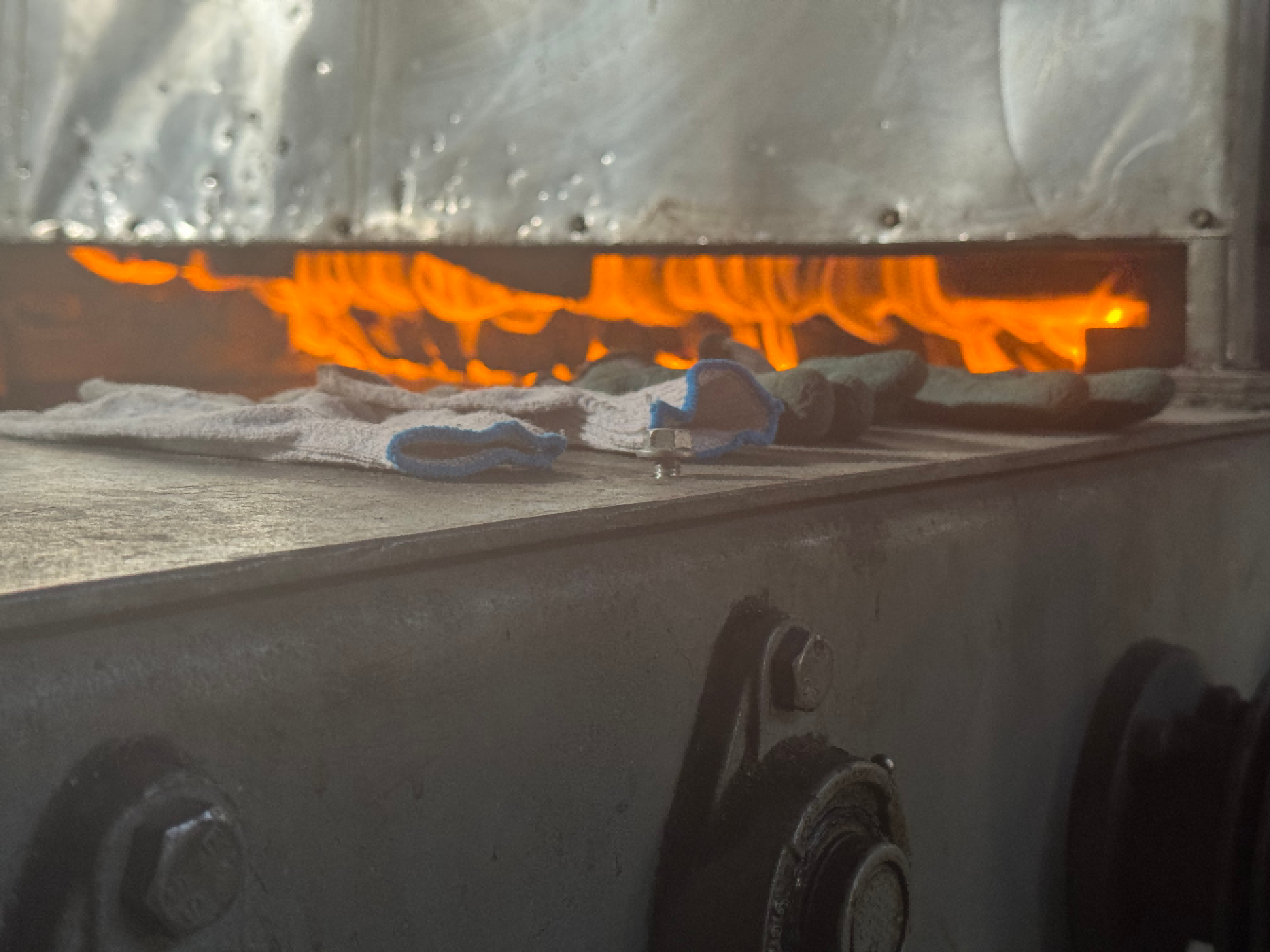
Heat treatment is one of the most critical steps in bearing manufacturing, directly influencing hardness, fatigue life, wear resistance, and dimensional stability.
Typical processes include:
Austenitizing at 830–860°C
Oil quenching
Tempering at 150–180°C
To improve machinability and achieve a favorable pre-quenching microstructure, bearing steel is often subjected to spheroidizing annealing before cold processing.
For high-precision bearings, additional treatments such as sub-zero treatment (around –80°C) and long-term stabilization tempering are applied to reduce retained austenite and ensure long-term dimensional stability.
At DSBR Bearings, heat treatment parameters are carefully controlled and continuously optimized according to bearing design and application requirements, ensuring stable performance across different production batches.
Conclusion: Material Control as a Core Manufacturing Capability
The performance and reliability of rolling bearings are fundamentally determined by bearing steel quality and heat treatment precision. A deep understanding of material behavior, combined with strict control of composition, purity, and microstructure, is essential for producing bearings capable of long-term operation under demanding conditions.
By integrating material science expertise with advanced manufacturing processes, DSBR Bearings delivers bearing solutions that balance performance, durability, and consistency—meeting the real-world needs of industrial, automotive, and heavy-duty applications.

